
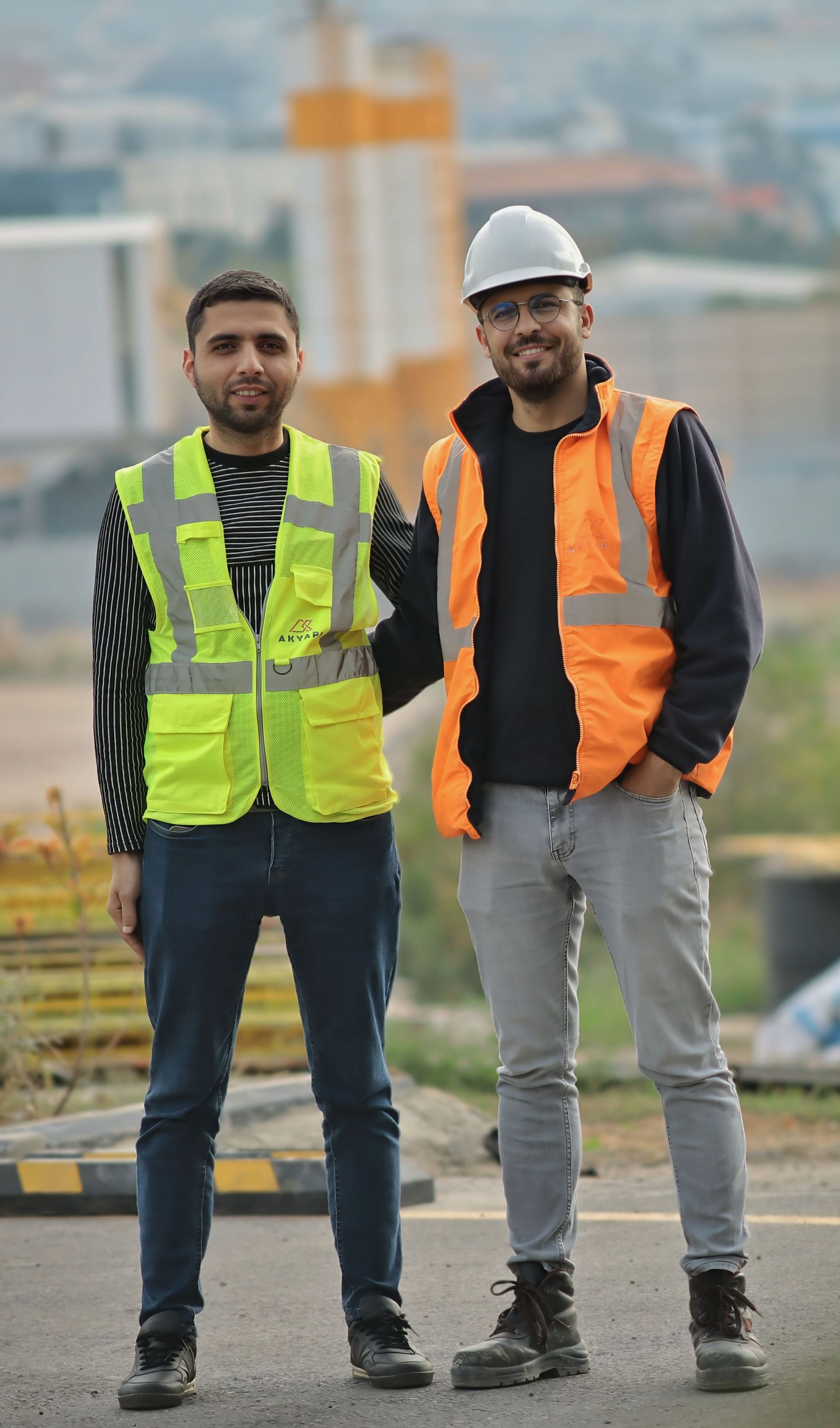
Safety Officer Supply Across the UAE
A project stops for three reasons. The client audit finds nobody competent signing permits. The regulator walks the site and cannot find a registered practitioner. Or your only safety officer resigns mid-shutdown and the replacement is six weeks of visa processing away.
HSE Manpower exists to close that gap. We supply site-ready safety officers on contract across the Emirates — people who have already worked the asset, already hold the pass, and can be at the gate while your competitor’s candidate is still waiting on a medical.
- CICPA-passedADNOC-experienced and ADNOC-approved
- NEBOSH-qualifiedOSHAD-registered for Abu Dhabi
- Mobilised in daysShortlists in 24–48 hours
- We remain the employerVisa, WPS payroll and insurance on our side
What a safety officer actually carries on a UAE site
The title is used loosely across the market, so it is worth being exact about what our officers are deployed to own.

The coalface of the permit-to-work system.
They walk the job before the permit is signed, check the isolation is real, confirm the gas test was taken by someone certified to take it, and refuse the permit when the answer is no. On a busy construction site that is thirty to sixty permit interactions a day.
Daily toolbox talks in the crew’s language.
Hindi, Urdu, Malayalam, Bengali, Tagalog, Arabic and English are all standard across our pool.
Scheduled inspections.
Scaffolding, excavations, edge protection, electrical distribution, hot work areas, confined spaces and welfare facilities.
Observations and investigations.
They raise and close observation cards, investigate near misses and first aid cases, and feed the incident data upward.
First responder.
They are the first responder on a site emergency until the supervisor and the emergency services arrive.
What a safety officer does not do is own the management system, sign off design risk, or represent the contractor at client HSE steering meetings. That work belongs to HSE supervisors, HSE engineers and HSE managers. Buying the wrong grade for the work is the most common and most expensive staffing error we see, and we will tell you when the role you have described is not actually an officer role.
Why UAE law makes this a compliance requirement, not a preference
Safety staffing in the Emirates is not discretionary. It sits on a stack of federal law, emirate-level frameworks and client codes of practice, and the enforcement is real — stop-work notices, fines, permit withdrawal, blacklisting from bid lists.
Fail any one of these and the consequence is not a warning letter.
It is a stopped job with your standby costs running.
Federal Decree-Law No. 33 of 2021
On the Regulation of Labour Relations, with its executive regulations under Cabinet Resolution No. 1 of 2022, it places a direct duty on the employer to provide adequate occupational safety and health means of protection and to appoint competent persons to oversee them.
Ministerial resolutions and the midday break
Ministerial resolutions on occupational safety and health set out the protective measures employers must implement. The MOHRE midday break rule prohibits outdoor work between 12:30 and 15:00 from 15 June to 15 September each year — a rule that requires somebody on site to actually police it.
OSHAD System Framework
Applies to every entity operating in Abu Dhabi. It requires appointed OSH practitioners registered with OSHAD at the tier appropriate to the risk profile, and requires entities to demonstrate that the appointment is resourced and competent — not a name on an org chart. Our Abu Dhabi officers are supplied registered and tier-appropriate.
Dubai Municipality
The Code of Construction Safety Practice governs construction sites, backed by DM local orders on public health and safety, with defined expectations for safety officer coverage scaled to headcount.
Trakhees
Sites inside Jebel Ali, Dubai Maritime City, Palm Jumeirah and other PCFC jurisdictions fall under Trakhees HSE Regulations, which operate their own approval and registration route for safety personnel.
Dubai Civil Defence
Civil Defence requirements layer over both DM and Trakhees for fire and life safety.
ADNOC Codes of Practice & CICPA
On client-controlled assets, contractual standards bite harder than statute. ADNOC Codes of Practice govern contractor HSE across ADNOC Onshore, Offshore and Refining assets, and physical access to operating areas requires a CICPA pass that takes weeks to originate from scratch.
DEWA & FANR
DEWA-controlled power and water projects, and the Federal Authority for Nuclear Regulation regime at Barakah, each carry their own contractor safety requirements.
Where we supply — every emirate, and the hubs that matter
Why the economic hub decides the competence you need
Generic national coverage claims are cheap. What matters is whether the officer has worked the specific environment, knows the gate procedure and understands the local regulator.
Abu Dhabi and Al Dhafra
Officers supplied here are CICPA-passed and OSHAD-registered as standard.
Where we deploy
- Ruwais Industrial City and the refinery and petrochemical complex
- Habshan and Bab gas processing
- Asab, Bu Hasa, Shah and Sahil onshore fields
- Offshore at Upper and Lower Zakum, Satah Al Razboot and Umm Lulu
- Das Island and Zirku Island
- KEZAD and the Khalifa Industrial Zone
- Musaffah industrial area and its shipyards
- Taweelah power and desalination
- Barakah Nuclear Energy Plant
The competence this hub needs
Ruwais is among the largest single-site refining and petrochemical complexes in the world, and its expansion programme keeps contractor headcount in the tens of thousands. Work there runs to ADNOC Codes of Practice, inside CICPA access control, at a permit volume that overwhelms officers who have only done building sites.
Habshan, Bab, Asab, Bu Hasa, Shah and Sahil are sour-service operations where H2S competence is not optional. The offshore assets add helicopter logistics, marine interfaces and a working week measured in rotations. KEZAD is the country’s fastest-growing manufacturing and logistics cluster; Musaffah is its fabrication and shipyard heartland, where module build and load-out dominate.
Dubai
Our Dubai pool is weighted toward high-rise construction, façade and MEP fit-out, and DM and Trakhees permit literacy.
Where we deploy
- Jebel Ali Free Zone and Jebel Ali Port
- Dubai Investments Park
- Dubai Industrial City
- Dubai South and the Al Maktoum airport expansion
- Expo City
- Techno Park and Al Quoz
- Dubai Maritime City
- Business Bay, DMCC and the downtown high-rise corridor
- Hassyan power complex
- Metro and roads infrastructure programmes
The competence this hub needs
Jebel Ali is the busiest container port in the region and sits beside a free zone holding thousands of industrial tenants, which means Trakhees jurisdiction, heavy vehicle movements and a permanently mixed contractor population.
Downtown Dubai and Business Bay are a vertical construction market where the hazards are façade work, tower cranes, lifting over public realm and confined-space risk in service cores. Dubai South and the Al Maktoum airport programme bring airside permit control into the picture.
Sharjah
Where we deploy
- Hamriyah Free Zone heavy fabrication and oilfield services yards
- SAIF Zone
- The Sharjah industrial areas serving manufacturing and logistics
The competence this hub needs
Hamriyah’s heavy fabrication and oilfield services yards bring lifting, hot work and load-out hazards alongside the manufacturing and logistics work of the wider industrial areas.
Fujairah
Where we deploy
- Port of Fujairah
- The oil terminal and tank farm cluster
- Fujairah Oil Industry Zone
- Bunkering operations
- The quarrying belt inland
The competence this hub needs
Fujairah is one of the world’s largest bunkering ports, with a tank farm cluster whose hazards are hydrocarbon storage and marine transfer.
Ras Al Khaimah
Where we deploy
- RAKEZ industrial and business zones
- The Al Ghail industrial corridor
- Cement and ceramics manufacturing
- Quarrying and aggregate operations
The competence this hub needs
RAKEZ and Al Ghail run on cement, ceramics and quarrying — dust, blasting, heavy plant and overhead crane work.
Ajman and Umm Al Quwain
Smaller markets where finding a qualified officer locally is genuinely difficult, and where we hold candidates specifically because others do not.
Where we deploy
- Ajman Free Zone
- The Ajman industrial areas
- UAQ Free Trade Zone
Al Ain
Where we deploy
- Quarrying
- Cement
- Agriculture-adjacent processing
- The infrastructure programme
We route officers to the hub whose hazards they already know, because the first fortnight of a placement is where value is won or lost.
Industries we serve
Typical safety officer deployments, sector by sector.
- Oil and gas — upstream onshoreWellsite, drilling, workover, flowline construction
- Oil and gas — offshorePlatform, jacket, subsea support, marine spread
- Refining and petrochemicalsTurnarounds, shutdowns, tank farm, loading
- Construction and infrastructureHigh-rise, roads, bridges, tunnelling, marine works
- EPC and fabricationYard fabrication, module build, site erection
- Power generation and transmissionCCGT, solar, substations, overhead lines
- NuclearConstruction support, outage, radiological interface
- Water and desalinationPlant construction, commissioning, O&M
- Marine, ports and shipyardsDry dock, cargo handling, stevedoring, bunkering
- ManufacturingSteel, aluminium, cement, ceramics, plastics
- Food and beverage productionHygiene-critical plant, ammonia refrigeration
- PharmaceuticalsCleanroom build, validation, plant operation
- Data centresConstruction, fit-out, critical facility operation
- Logistics and warehousingMHE operations, racking, cold chain
- Mining and quarryingDrill and blast, crushing, haulage
- AviationAirside works, MRO hangars, fuel farms
- Rail and metroTrackside, depot, tunnel, systems installation
- Facilities managementMulti-site hard services, high-rise maintenance
- TelecommunicationsTower work, rooftop installation, cable pulling
- Waste management and recyclingTransfer stations, processing plant
What makes HSE Manpower different
We hold the passes before you ask.
A CICPA-passed officer is not a candidate we start sourcing when your PO lands. We carry an active bench of CICPA-passed, ADNOC-experienced officers, plus DEWA and Trakhees-familiar personnel and OSHAD-registered practitioners. That is the difference between mobilising in days and mobilising in six weeks.
Asset-level familiarity, not emirate-level.
We match on where the officer has actually worked. A man who has done three Ruwais turnarounds understands the shutdown tempo, the permit office, the gate timings and the contractor interfaces in a way that a strong CV from another emirate does not replicate in week one.
We screen the certificate, then we screen the person.
Certificate fraud is a live problem in this market. We verify NEBOSH, IOSH, OSHAD registration and third-party qualifications at source, then run a technical interview with a practising HSE professional. A clean certificate that cannot survive ten minutes on permit-to-work does not reach you.
Language coverage that works on the floor.
An officer who cannot brief a crew in their own language is a report writer, not a safety officer. We deploy with the site’s actual language mix in mind.
Replacement commitment.
If a supplied officer is not performing, we replace rather than defend. The relationship is worth more than the placement.
We stay the employer of record.
Visa sponsorship, WPS-compliant payroll, medical insurance, end-of-service benefits, MOHRE compliance and repatriation stay with us. You get the resource and the coverage without the establishment burden.
Certifications across our safety officer pool
NEBOSH International General Certificate and IGC-equivalent qualifications sit as the baseline, with NEBOSH International Diploma and Level 6 holders available for higher-tier roles.

- NEBOSH IGC (baseline)
- NEBOSH International Diploma / Level 6
- IOSH Managing Safely & membership
- OSHAD-SF practitioner registration
- First aid & CPR
- H2S awareness and escape
- Confined space entry and rescue
- Working at height and rescue
- Fire warden
- BOSIET & HUET (offshore)
- Scaffold inspection
- ISO 45001 internal and lead auditor
How mobilisation works
You send the scope
Asset, location, duration, headcount, shift pattern, and any client-specific pass requirement.
Shortlist in 24–48 hours
Drawn from the bench, with passes and certifications already verified.
You interview
By video or in person, on your schedule.
We mobilise
Offer, visa or transfer, medical, Emirates ID, client-side pass processing, induction and site mobilisation. With a valid pass and transferable status, under a week is routine. Bulk shutdown mobilisations are planned against your milestone dates.

Talk to us
Tell us the asset, the date and the headcount. We will tell you honestly whether we can hit it — and if the grade you have asked for is wrong for the work, we will say that too.
Officer grades and how to specify what you need
Not every officer requirement is the same, and the market’s habit of writing “safety officer” for everything costs clients money in both directions.
Junior safety officer
Two to four years’ experience, NEBOSH IGC held, working under close supervision. Suited to lower-risk sites, support coverage on a large site, or welfare and housekeeping-weighted roles.
Safety officer
Four to eight years, NEBOSH IGC plus sector credentials, able to run a work front independently, hold permit discussions with supervisors and handle first-line investigation. This is the bulk of what we place.
Senior safety officer
Eight years or more, often NEBOSH Diploma, capable of covering a shift where no supervisor is present, mentoring junior officers and handling client interactions. Frequently the right answer where a client has written “supervisor” but the role is really enhanced officer coverage.
Specialist officer
Fire watch and hole watch, confined space attendant, authorised gas tester, scaffold inspector, banksman — narrow scopes supplied against specific activities rather than general site cover.
The details that actually speed things up:
- The asset and its operator
- The emirate and jurisdiction
- The client permit system in use
- Headcount and work fronts to be covered
- Shift pattern, including nights
- Contract duration
- Any mandatory pass or registration
- The site’s dominant languages
Send those and we can usually shortlist the same day. Send “need 3 safety officers Dubai” and we will come back with questions before we come back with people.
Frequently asked questions
What is a safety officer responsible for on a UAE construction site?
Daily site inspections, permit-to-work checks, toolbox talks, enforcing the midday break, incident and near-miss reporting, emergency response, and closing observations. They work at task level under an HSE supervisor or manager.
Do I legally need a safety officer in the UAE?
Federal labour law requires employers to provide occupational safety protections and appoint competent persons. Abu Dhabi’s OSHAD framework and Dubai Municipality construction safety requirements both mandate appointed, competent safety personnel scaled to site risk.
What is a CICPA pass and why does it matter?
CICPA is the Critical Infrastructure and Coastal Protection Authority pass required for physical access to ADNOC operating areas. Originating one takes weeks. Hiring officers who already hold valid passes removes that delay entirely.
How quickly can you mobilise a safety officer?
Shortlists reach you within 24 to 48 hours. Candidates holding valid passes and transferable visa status can mobilise in under a week. New visa processing typically takes three to five weeks depending on nationality.
What qualifications do your safety officers hold?
NEBOSH IGC as the baseline, plus IOSH certification, OSHAD-SF registration for Abu Dhabi roles, first aid, H2S, confined space and working-at-height credentials. Higher-tier officers hold NEBOSH Diploma or Level 6.
Can you supply officers for ADNOC projects?
Yes. We maintain a bench of CICPA-passed, ADNOC-experienced and ADNOC-approved officers familiar with ADNOC Codes of Practice across onshore fields, offshore platforms and the Ruwais refining complex.
Do you cover offshore assets?
Yes. We supply officers with BOSIET, HUET and offshore medicals for platforms and marine spreads at Upper and Lower Zakum, Satah Al Razboot, Umm Lulu, Das Island and Zirku Island.
Who sponsors the visa for supplied officers?
HSE Manpower remains the employer of record. We hold the visa, run WPS-compliant payroll, provide medical insurance and cover end-of-service benefits. You carry no sponsorship or establishment obligation.
What is the difference between a safety officer and an HSE supervisor?
An officer executes at task level — permits, inspections, toolbox talks. A supervisor coordinates a team of officers, owns shift coverage, manages contractor interfaces and reports upward on performance and compliance.
How many safety officers does my site need?
It depends on headcount, risk profile, shift pattern and client requirements. Dubai Municipality and OSHAD both scale expectations to site risk. Send us your scope and we will advise on realistic coverage.
Do you supply officers for short shutdowns and turnarounds?
Yes. Surge staffing for planned shutdowns and turnarounds is one of our core services, including bulk mobilisation of teams planned against your milestone dates and demobilised on completion.
Which emirates do you cover?
All seven. Abu Dhabi and Al Dhafra, Dubai, Sharjah, Fujairah, Ras Al Khaimah, Ajman and Umm Al Quwain, including free zones, industrial cities, ports and offshore assets across each.
Are your officers registered with OSHAD?
Officers deployed in Abu Dhabi are registered with OSHAD at the tier appropriate to the activity’s risk profile, as the OSHAD System Framework requires of appointed occupational safety and health practitioners.
What happens if a supplied officer underperforms?
We replace them. Raise the concern and we work the replacement immediately rather than defending the placement. Continuity of cover on your site is managed through the handover.
Can we convert a supplied officer to our own payroll?
Yes. Temp-to-perm arrangements let you trial an officer on contract before absorbing them onto your sponsorship. Terms are agreed upfront so there are no surprises at conversion.